The Last Board Standing · Part 2 of 3
The Exchange Nobody Wanted to Sacrifice
Both players had the same winning idea available. Neither could bring themselves to play it.
In Part 1, Savitha Shri won a rook endgame against Kazakhstan, a team that only needed a draw and played not to lose. Two rounds later, the situation looked even more familiar, and even more demanding.
India were facing China, who were two match points ahead of us. We needed to win this match to stay in the gold medal race. Two games were finished and the score was 1-1. Vantika was still playing on board three and was the one defending, so there was almost no hope of a win there. It was down to board four, once again.
Game 2: China
Savitha, White against Zhai Mo, went wrong early and was lost. But she fought back superbly and reached a very promising position by move 40.
What should White play?
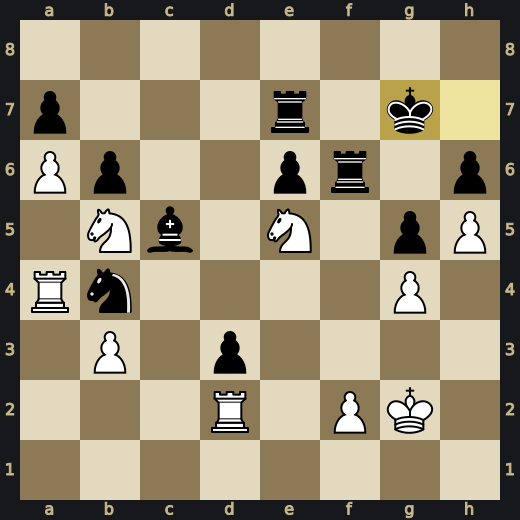
The computer says she is completely winning. Over the board it is far from clear. She had to give up the exchange with 41.Rxb4! and correctly evaluate the resulting position. After 41...Bxb4 42.Rxd3, Black's position is very difficult, with Nc6 coming next.
She didn't go for it. Most people do not want to sacrifice material in a high-pressure situation. I'm confident she would have played it in a normal individual game.
For the next several moves, both sides went back and forth. Black kept putting the knight on b4, offering the same sacrifice again on moves 43 and 45, and she declined every time.
The same decision, on the other side
It would be easy to say that this was just Savitha's nerves. It wasn't. Her opponent faced the same kind of decision, and made the same choice.
What should Black play?
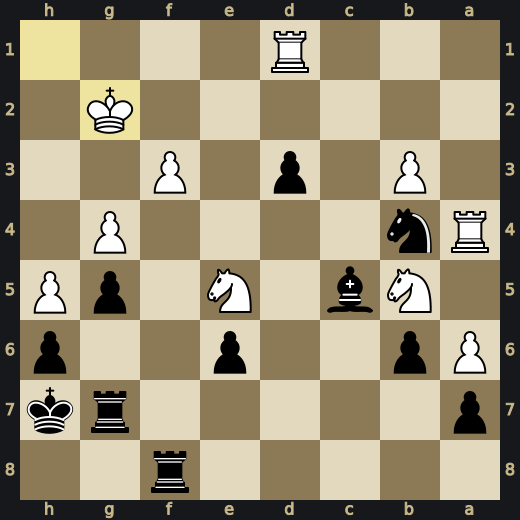
Then the tide turned. If Black finds the right move, Black is winning. The move was 48...Rd8!, using the passed pawn. I suspect Black feared 49.Rxb4 Bxb4 50.Nc6, but there's 50...Rd5!, hitting the knight on b5.
When you're defending, you see ghosts.
Her opponent wanted to be safe and immediately retreated the knight with 48...Nd5??.
What should Black play?
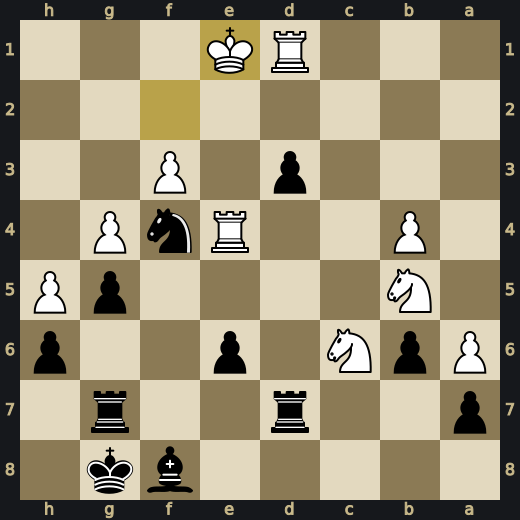
A few moves later, Black is in real trouble. The engine still says 0.00, but she needed very accurate moves and had 50 seconds left.
The right idea was 54...Rgf7!, which gives up the exchange. 55.Ne5 is met with 55...Rd5!, winning the knight on b5. Instead, Black panicked and shuffled with 54...Ng2?! 55.Kd2 Nf4, and Rc1-c4 gave White a winning advantage.
That wasn't the only moment. There were multiple points in this game where Black should have given up the exchange, and every time, the safe-looking move felt better.
Why nobody sacrifices
Look at what happened. Savitha, the attacker, had a winning exchange sacrifice and declined it three times. Her opponent, the defender, had an exchange sacrifice that held the position and never played it either. Same idea, same reluctance, from both sides of the board.
The reason is simple. When you give up material, you pay a price you can count: a rook for a knight, right now, on the board. What you get in return is something you have to calculate and trust. Under pressure, with a clock running down and a whole team watching, counting what you keep feels safer than trusting what you can't count.
A sacrifice is judged by the position, not by the material.
The game ended the way many of them do, with the bigger mistakes deciding it. Savitha won. But Vantika lost on the third board, so the match was drawn 2-2. The gold was gone, but silver was still possible.
And the next day, in the final round, the roles would be reversed. That is Part 3.