The Last Board Standing · Part 1 of 3
Playing Not to Lose
Kazakhstan only needed a draw. Savitha needed a win. Only one of them played like it.
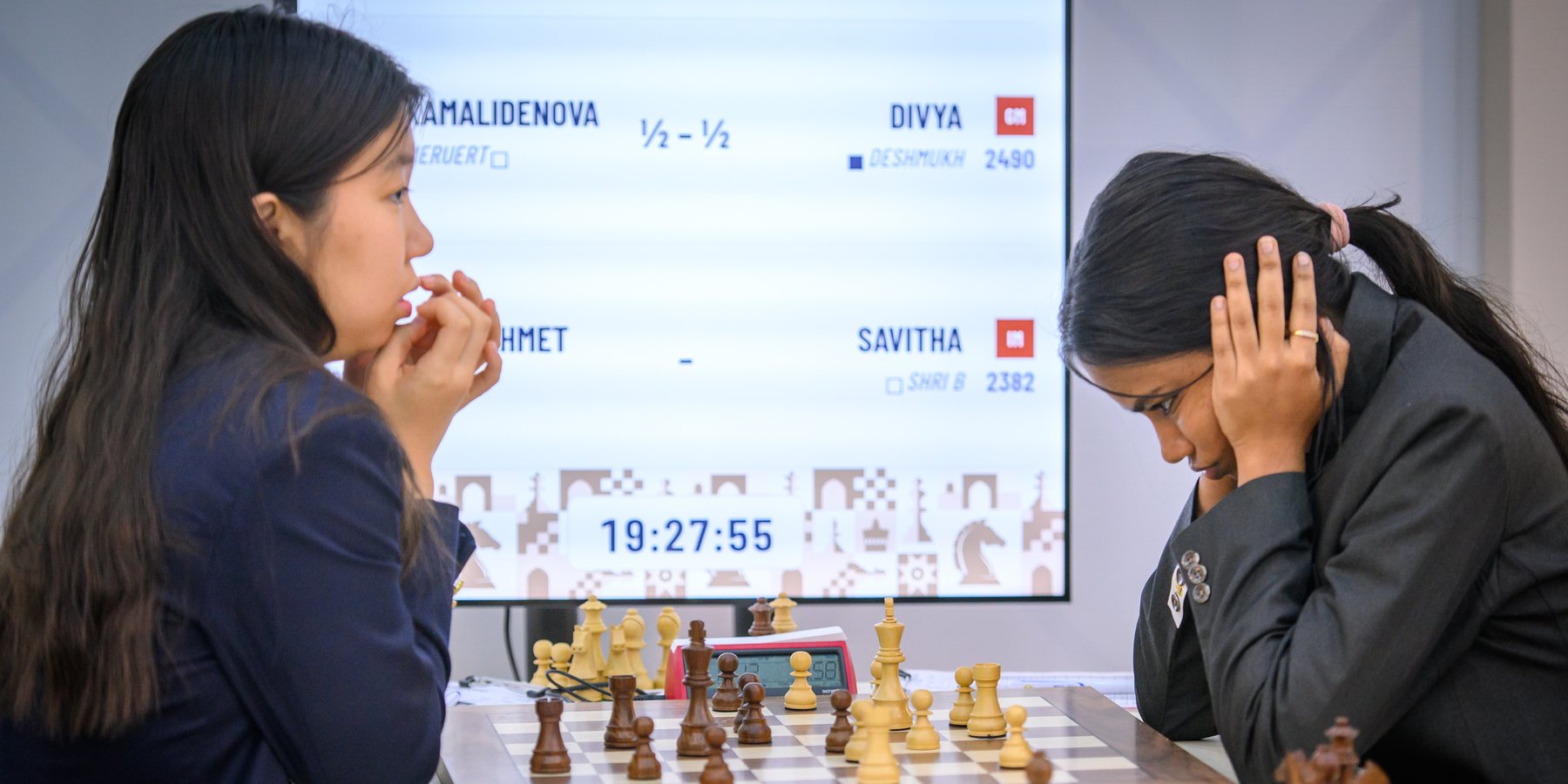
Imagine you are carrying the hopes of over a billion people. Three of your teammates have finished their games. The team has already lost to Poland earlier in the event, so there is no margin for error. The match score is 1-2 against you, and you have to win to save the match. Every other board is done. Whatever happens next happens on yours, alone. On it is a completely equal rook endgame.
Let's rewind. Savitha Shri was making her Olympiad debut as the reserve, still a teenager. Nobody expected her to play this many games, yet she began with 6/6. In moments like this, past results count for very little. What you feel is the fear that today is the day you let the team down.
This is the first of three stories from the 2026 Olympiad about the same moment: being the last board standing. Each one is a single game, and each one has its own lesson.
Game 1: Kazakhstan
Savitha is White. The position after move 40 is objectively 0.00. Both players get an extra 30 minutes. Black has an active king and a healthy pawn structure, and in an ordinary open tournament this would be drawn soon. Here, a draw is no use to her.
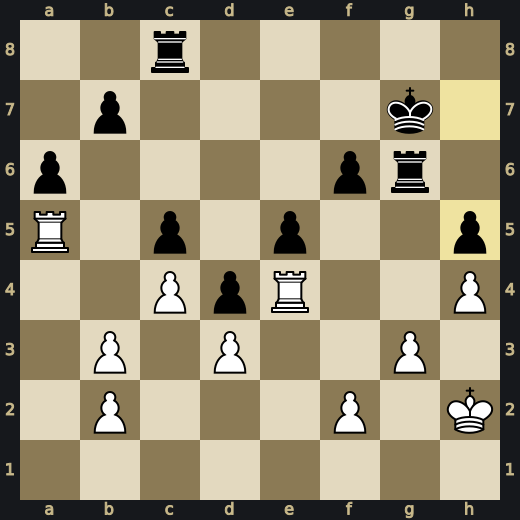
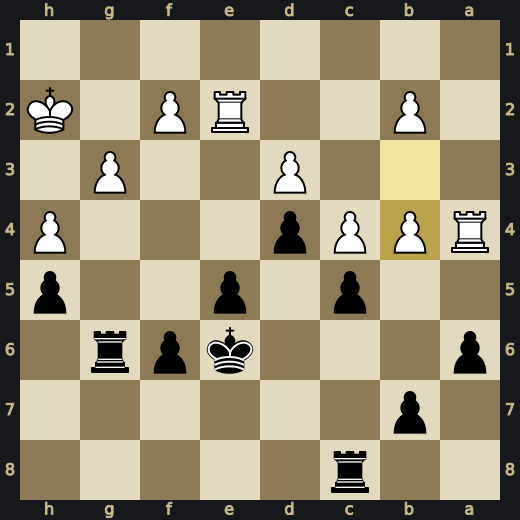
White gets a queenside pawn break. It activates her rook but also frees Black's position, and Black starts bringing the king over to the queenside.
What should Black play?
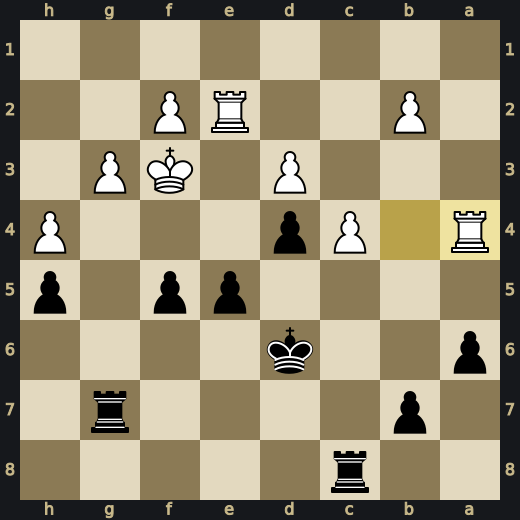
In fiction, one side applies pressure until the defense cracks. Real games are rarely that clean. White had brought the king toward the centre, but the last move, 47.Ra4?, was a serious mistake, and Black now has a winning advantage with correct play.
The strongest move is 47...Rf8!, preparing ...f4, and White's king is in big trouble. Instead, Black played 47...Re7?, already a step in the wrong direction. Rook endgames are about rook activity, and Black started playing passively. That makes sense given the team situation: Black's team only needed a draw to win the match. The pressure was on both sides, but it pushed them in opposite directions.
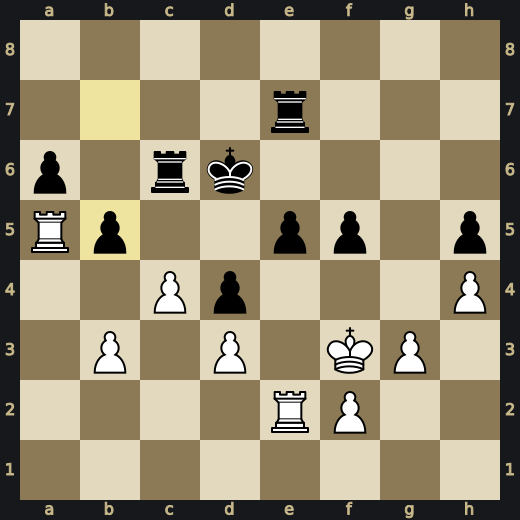
Black then lashed out for counterplay with 49...b5! It was a good move, but Black was down to under two minutes, and playing under that pressure is brutally hard. By now we were getting optimistic. White played 50.Rea2, and Black slipped with 50...bxc4?!, with only 32 seconds left.
What should Black play?
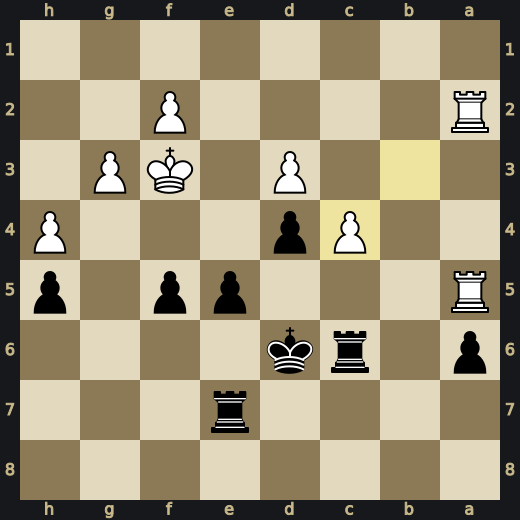
Black had to give up the a6 pawn and trust the central pawns, with something like 51...e4+! 52.Ke2 Re5. Instead came 51...Rb7??, and White won easily after 52.Rd5+ Ke6 53.Raa5, and the game was effectively over.
What went wrong for Black
People make two mistakes in this situation.
First, they start defending in their heads. If a draw is enough, they refuse any complications, and that is a terrible mindset. You play non-critical moves, your opponent's advantage grows, and eventually you're forced into far riskier continuations anyway.
Second, they burn time. You double- and triple-check every move, trying to make sure nothing can go wrong, and the clock quietly drains. The problem is that time isn't just a resource, it's what makes good decisions possible. With plenty of time, you can calculate the critical line to the end. With a minute left, you can't. You start relying on gut feeling, you look at fewer candidate moves, and you drift toward whatever looks safest, which is usually the passive one. Eventually you're making moves just to keep the game going, not to improve your position. Meanwhile your opponent, with more time, keeps asking questions.
The two mistakes also feed each other. The less time you have, the less you dare to calculate anything complicated, so you avoid complications even more. There is a saying that there are no heroes in time trouble, and it is very true. Even the very top players make mistakes with little time on the clock.
The takeaway
Kazakhstan did not lose because they were worse. After 47.Ra4, the engine had Black clearly better. They lost because a draw was enough for them, and that thought changed how they played every move afterwards: passive moves, a draining clock, and a position that was gone within five moves.
If a draw is enough, don't play for a draw. Play the position.
Savitha won that game, but the story didn't end there. Two rounds later, she was in the same seat again, this time against China, with the gold medal still in sight. That one is Part 2.