Choosing Your Openings · Part 2
Don't Look for an Advantage. Look for Problems.
The engine says it's equal. The real question is whether your opponent can find the moves.
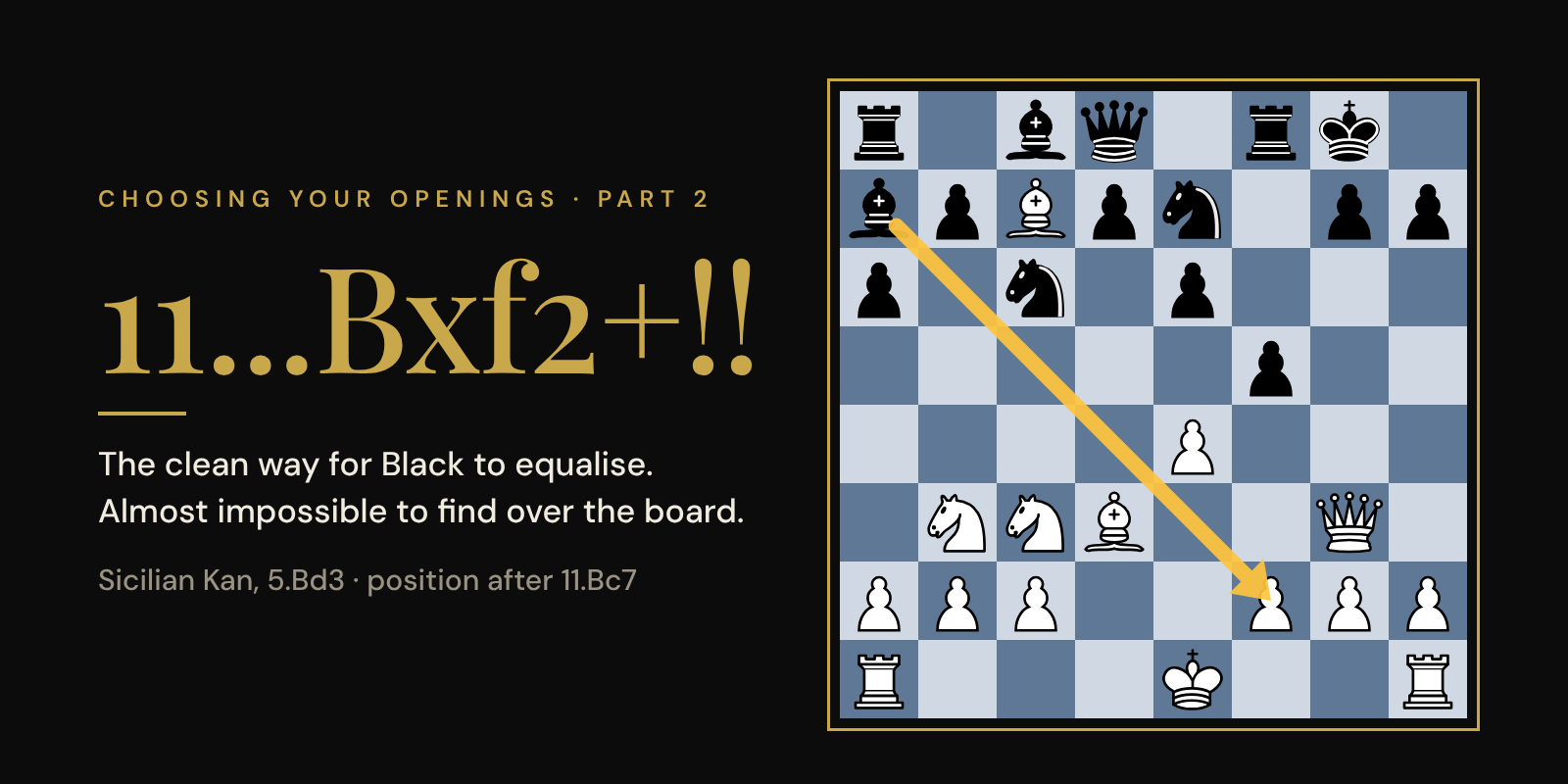
Last time I said the first rule is to be able to tell a story. The second is to try to make lesser-played moves work first, even if the engine isn't too happy with them at the start.
Here is a recent example. I was looking for ideas for White in the Sicilian Kan, and 5.Bd3 has always been a favourite of mine. After 5...Bc5 6.Nb3 Ba7 7.Qe2, engines find plenty of resources for Black, so I went looking for a different seventh move.
A rare move: 7.Qf3
The database has more than 7,000 games from this position. The most popular move is 7.Qe2, and 7.Qg4 is also an option. 7.Qf3 has been played in only 37 of them, about 0.5%.
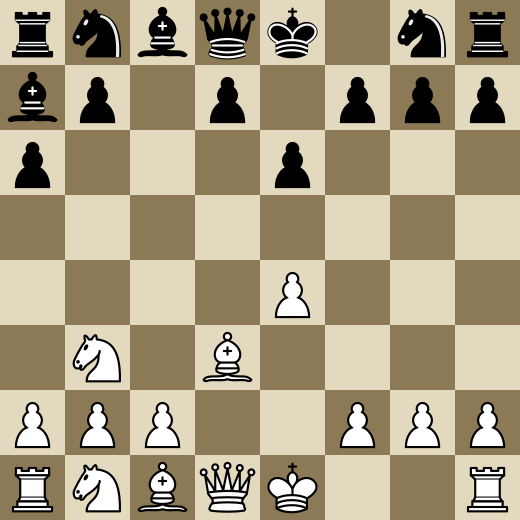
The queen move has a concrete point: 7...Nf6 loses to 8.e5. Most other moves allow the queen to go to g3, hitting g7. 7...Ne7 is probably Black's best, and it has also become a trend after 7.Qe2. Step through the other tries on the board to see why they are worse.
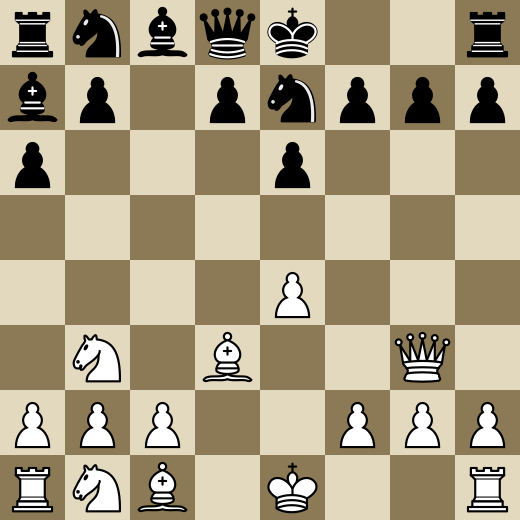
Castling looks like the logical reply, but even then Black can go wrong. I played this against Adhiban, who made a Kan course for Black. He spent a lot of time here and still played 8...Nbc6?, a big mistake. I was clearly better after 9.Qxg7 and had a big advantage, but the game ended in a draw. The comments on the board show how I would improve.
Look for problems, not an advantage
The main line goes 8...O-O 9.Nc3 Nbc6 10.Bf4, and only a handful of games have reached it. That is exactly what I am looking for. I am not trying to get an objective engine advantage. I want positions that are not easy for an unprepared opponent, where the natural moves fail or the king ends up under attack.
What should Black play?
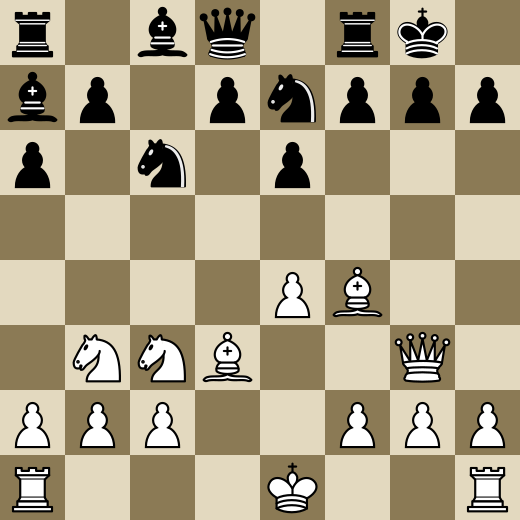
The idea is to bring the bishop to d6, or to play Bc7 and kick the queen onto a worse square. It is not the engine's top choice, but the engine likes only one reply for Black. The clean equaliser is 10...f5 11.Bc7 Bxf2+, which looks crazy. Everything else I tried leaves Black worse, and I could not find anything easy.
You can't just look at the engine's evaluation and decide which line to play.
The evaluation tells you what happens if both sides play perfectly. Your opponent is not an engine. A line where Black has one narrow path and a dozen natural mistakes is worth more than a line that is 0.2 better but has been played a thousand times. This is where the human touch is needed: use the engine to check that the idea is sound, then use your own judgement to find the move that causes the practical problems.
That is also the best way to stand out with White: get away from the most-played options, and look for moves that make your opponent think.